Case study
MindNet
An AI companion app where people build a personal replica, then think out loud with it.
- Mobile app
- Conversational UI
The brief
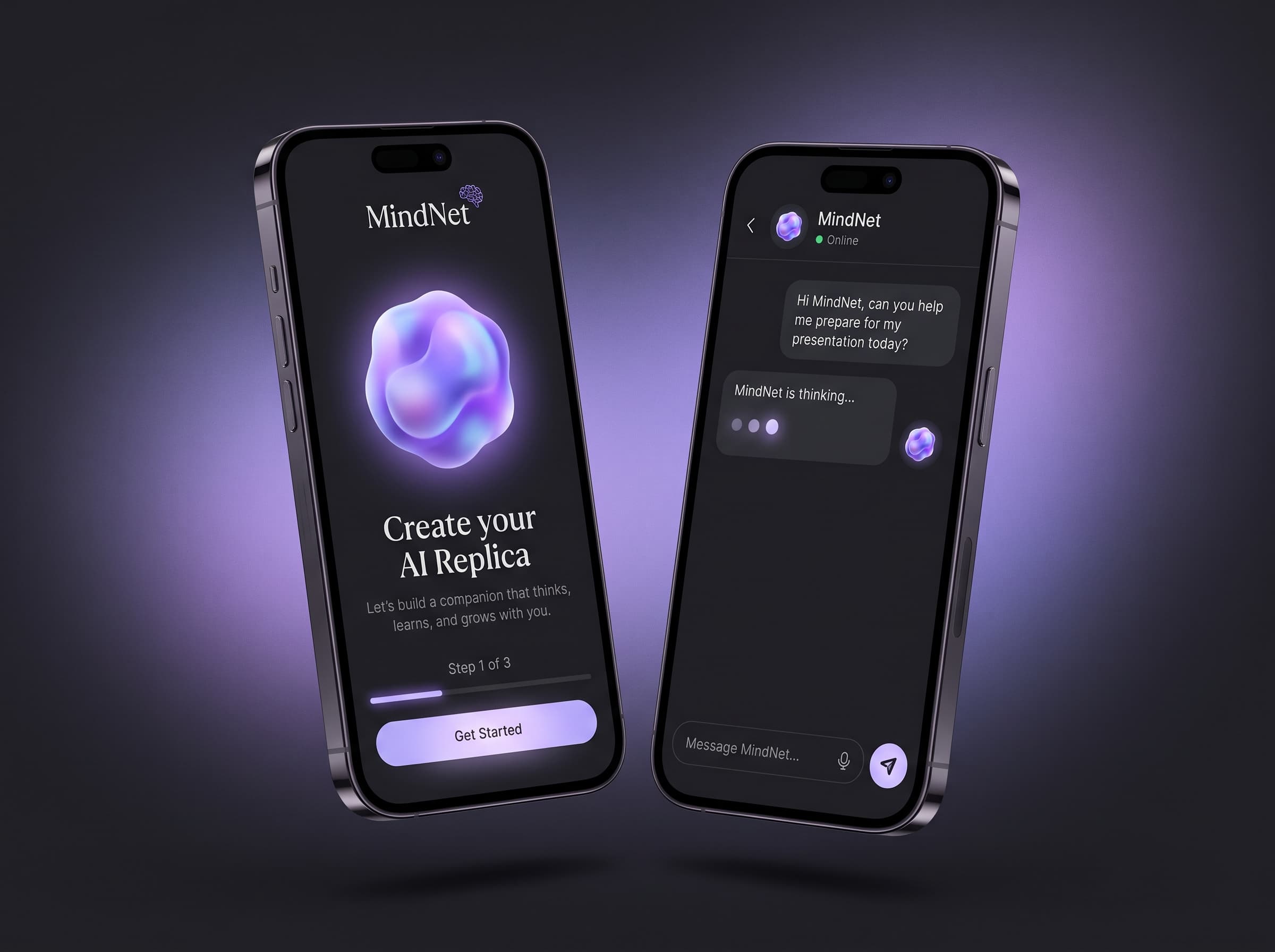
MindNet is an AI companion that people shape into a personal replica: it learns how they think, then talks things through with them. The idea was strong, but the first screen was empty, and nothing told people what the assistant was doing while it worked.
The goal was to make the first conversation feel personal within minutes, and every conversation after it feel calm and trustworthy.
What I designed
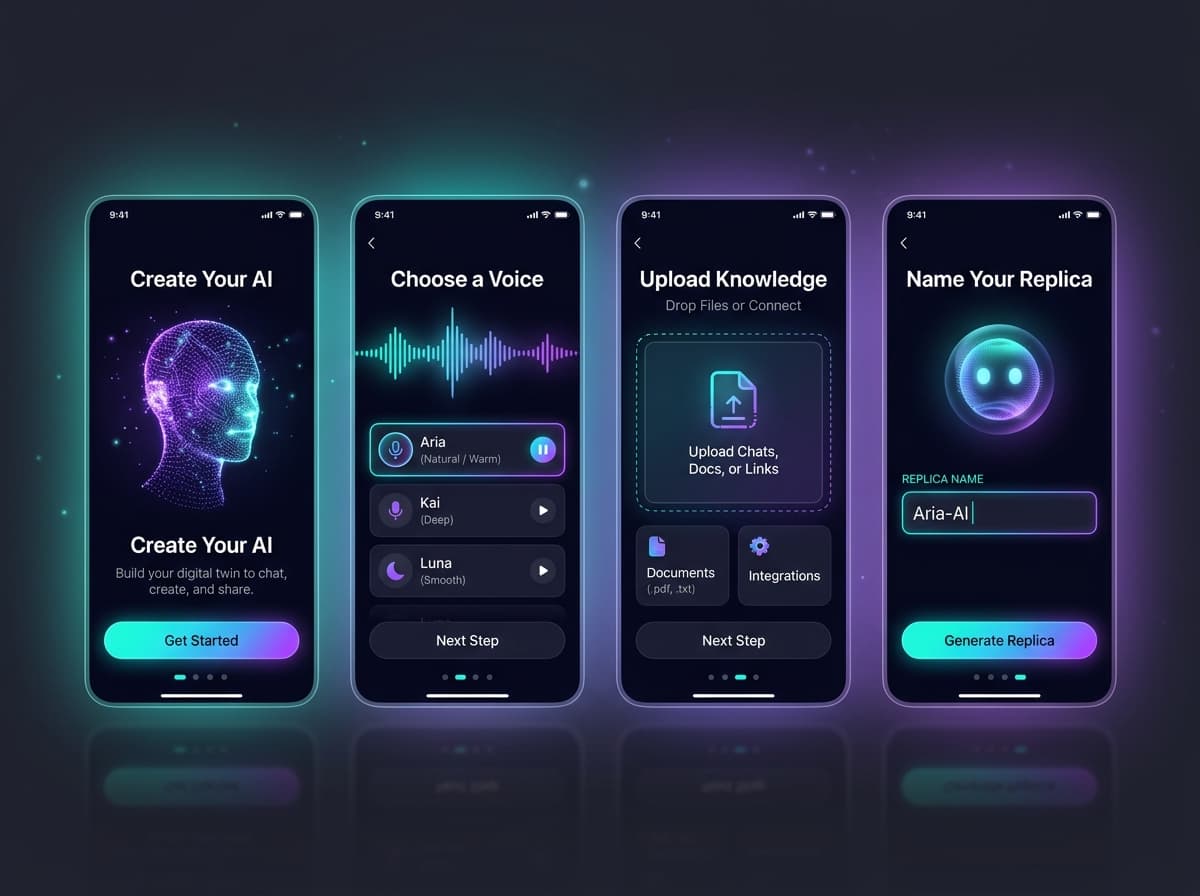
I started with the moments that decide whether people come back: setting up the replica, sending the first message, and waiting for an answer.
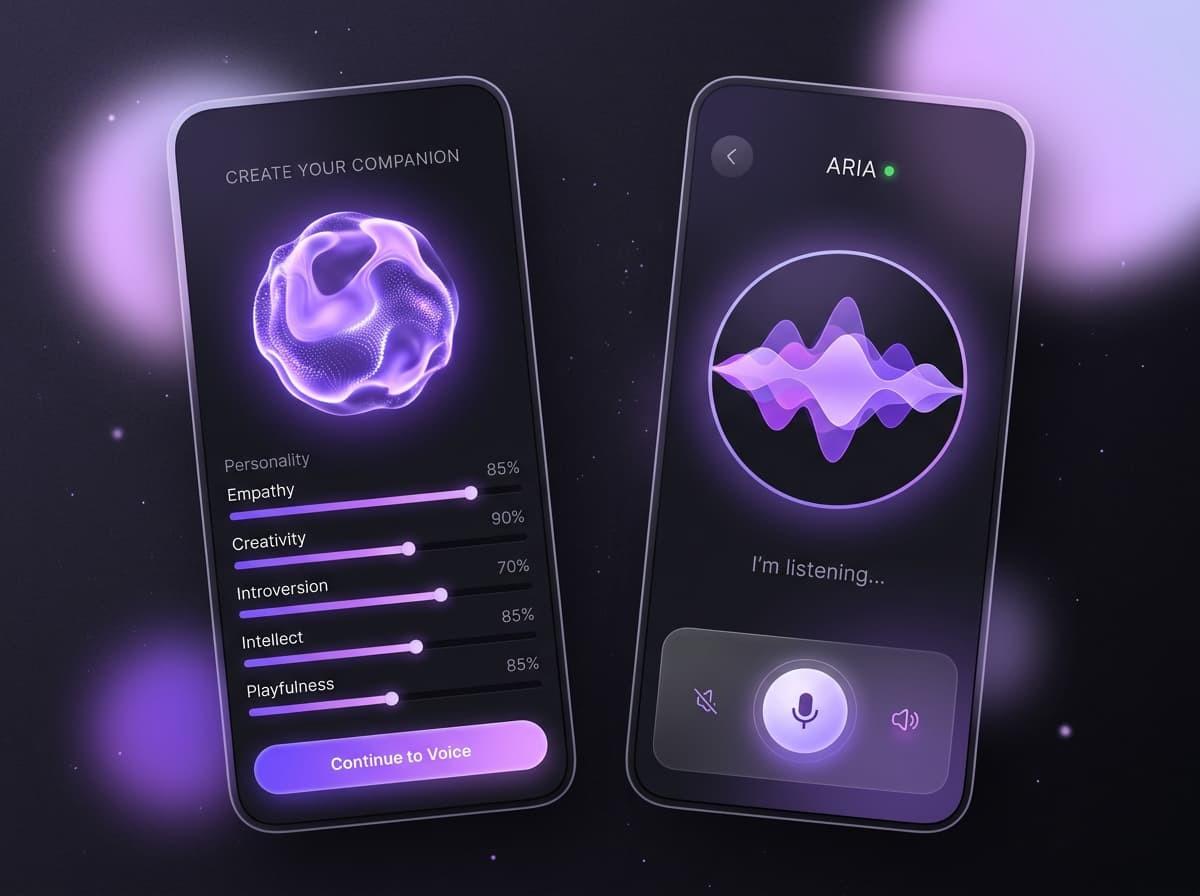
- A guided replica builder that turns a blank profile into a personality in a few short steps.
- Conversation states for thinking, typing and answering, so people always know what the assistant is doing.
- A voice mode with a large, readable waveform and one obvious control.
- A soft dark visual language with lavender and violet accents that stays easy on the eyes in long chats.
How it came together
Key flows were prototyped early and tried on real devices, then refined screen by screen. Every component was built in Figma with clear states for engineering, from an empty chat to a lost connection.